




 English

In product development, balancing high quality with manufacturing costs is always a top priority for engineers and procurement managers. When it comes to manufacturing custom CNC machining parts, minor design adjustments can lead to significant cost savings.
JeaSnn, as a leading CNC Machining parts manufacturer in China, we understand how design choices impact production time and pricing. In this Article, we will share actionable Design for Manufacturing (DFM) tips to optimize your precision CNC milling components and lathe parts for maximum cost reduction without sacrificing performance.
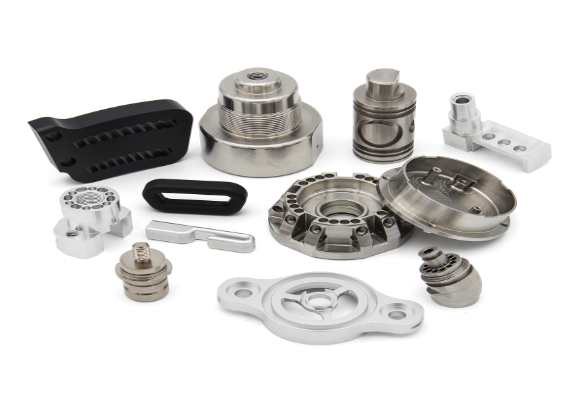
1. Choose the Right Material Wisely
Material selection is one of the biggest drivers of custom CNC machining parts costs. The raw material cost itself matters, but how easily that material can be machined (machinability) matters even more.
Aluminum vs. Stainless Steel: Aluminum (such as Aluminum 6061) is highly machinable, meaning CNC machines can cut through it rapidly, reducing cycle times. Stainless steel (like 316 or 304) is much harder and takes longer to process, which increases labor and machine wear costs.
Our Advice: Unless your application strictly requires the corrosion resistance of stainless steel or the high-temperature limits of titanium, opt for aluminum for your precision machining services to keep expenses low.
2. Avoid Deep and Narrow Internal Cavities
When designing precision CNC machined components, deep pockets or narrow internal cavities require long, fragile cutting tools. These tools are prone to deflection, vibration, and breakage, forcing the machinist to slow down the cutting speed.
The Rule of Thumb: Limit the depth of internal cavities to 4x the width of the cavity.
Cost-Saving Tip: If your design requires a deep pocket, consider a modular design. Splitting a complex component into two simpler CNC lathe parts that can be bolted together later is often more cost-effective than carving a deep cavity out of a single block.
3. Design Realistic Internal Corner Radii
Many designers mistakenly draw sharp 90°vertical internal corners. However, because CNC Milling cutters are round and rotating, they naturally leave a radius at internal vertical corners.
The Problem: Forcing a machine to create a sharp internal corner requires secondary EDM processing, which skyrockets the cost of your custom machining services.
The Solution: Ensure your internal corner radii are at least 130% of the milling tool's radius. For example, if you use a 6mm end mill, design a corner radius of 4mm rather than a tight 3mm. This allows the tool to glide smoothly through corners without stopping or breaking.
4. Relax Tight Tolerances Wherever Possible
While our facility excels at tight tolerance CNC Machining (up to±0.005mm), unnecessarily tight tolerances drive up costs exponentially. Tight tolerances require specialized inspection equipment, slower machining feeds, and lead to higher scrap rates.
Optimization Strategy: Only assign tight tolerances to critical mating surfaces or press-fit areas (like bearing seats). For non-critical dimensions, stick to standard industrial tolerances (±0.1 mm or±0.125 mm) to leverage affordable low volume CNC machining options.
5. Standardize Tapped Holes and Thread Depths
Adding threaded holes is a common requirement for precision CNC milling components, but designing them incorrectly can inflate your manufacturing invoice.
Keep Threads Shallow: Thread strength peaks within the first 2 to 3 times the hole's diameter. Designing threads deeper than 3x the hole diameter provides no structural benefit and significantly increases the risk of tap breakage.
Standard Sizes: Always use standard tap sizes (e.g., M3, M4, M5, M6) rather than custom thread pitches. Standard tooling means faster setups and lower production costs.
6. Minimize Machine Setups and Orientations
Every time a machinist has to manually flip, rotate, or re-fixture a part to machine a different face, labor costs and setup times increase.
Design for Fewer Setups: Try to design your parts so that all features can be machined from a single orientation or, at most, two setups.
Upgrade to Advanced Machining: If your part has complex geometries on multiple faces, utilizing a 5-axis CNC machining China supplier can finish the part in a single setup, drastically reducing labor time and improving accuracy.
Ready to Optimize Your Production Costs?
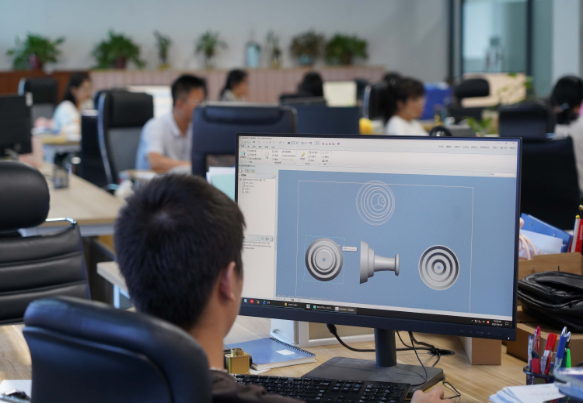
Optimizing your designs for CNC machining China doesn't mean compromising on your product's integrity.At JeaSnn, we don't just machine parts—we help you optimize them. Send your 3D/CAD drawings (STEP, IGES, or PDF formats) to our engineering team today. We provide a free, comprehensive DFM (Design for Manufacturing) review alongside a highly competitive RFQ within 24 hours.
Email us at: engineer@cncpartschina.com