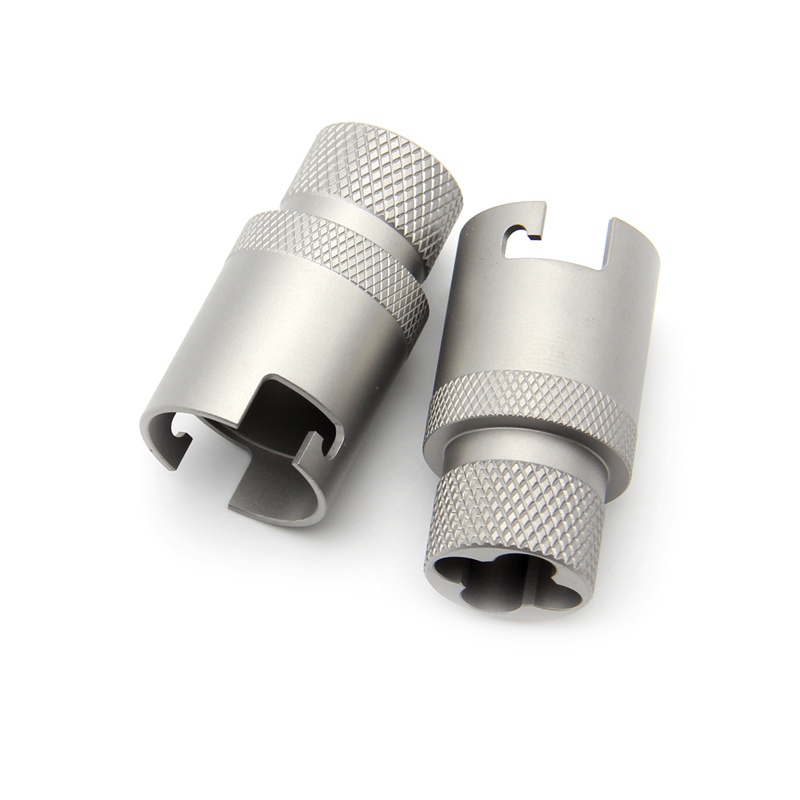


Stainless Steel CNC Machining Services provide precision manufacturing solutions for producing stainless steel components with complex geometries, tight tolerances, and consistent dimensions. Using advanced CNC milling, CNC turning, drilling, and other machining processes, stainless steel Materials can be manufactured into custom parts for a wide range of industrial applications.
Stainless steel is valued for its corrosion resistance, strength, durability, and attractive surface appearance. However, it can also be more challenging to machine than some common metals. Professional CNC Stainless Steel Machining services combine suitable cutting tools, machining parameters, equipment, and quality control processes to achieve reliable results.
From prototypes and small batches to high-volume production, Custom Stainless Steel CNC Machining can be tailored to specific part designs, material grades, dimensions, surface finishes, and application requirements.
Stainless Steel CNC Machining is a subtractive manufacturing process in which computer-controlled machine tools remove material from stainless steel stock to create a finished component.
Depending on the part design, CNC equipment can perform operations such as:
CNC milling
CNC turning
CNC drilling
CNC tapping
CNC boring
CNC reaming
CNC threading
Precision finishing
The CNC machine follows digital CAD/CAM instructions to control tool movement and cutting parameters. This allows manufacturers to produce complex stainless steel components with repeatable dimensions.
Stainless Steel CNC Machined Parts can be manufactured in many shapes and configurations depending on the application.
Typical CNC stainless steel components include:
Shafts
Bushings
Flanges
Brackets
Housings
Connectors
Valves
Fittings
Pins
Spacers
Precision mechanical components
Custom industrial components
CNC machining is particularly suitable for parts that require complex geometries, accurate holes, threads, grooves, slots, or tight dimensional tolerances.
Different stainless steel grades offer different combinations of corrosion resistance, strength, machinability, and temperature performance.
304 stainless steel is one of the most widely used stainless steel grades. It offers good corrosion resistance, durability, and general-purpose performance.
It is commonly used for:
Industrial components
Food processing equipment
Hardware
Machinery parts
General engineering applications
316 stainless steel provides enhanced corrosion resistance compared with 304, particularly in environments involving moisture and certain chemicals.
It is often selected for:
Marine components
Chemical equipment
Medical equipment
Food processing applications
Corrosion-resistant components
303 stainless steel is known for improved machinability compared with many other austenitic stainless steel grades. It can be a suitable option for precision turned components where machining efficiency is important.
17-4 PH stainless steel is a precipitation-hardening stainless steel offering high strength and good corrosion resistance.
It can be used for demanding mechanical and industrial components where strength is an important requirement.
The appropriate stainless steel grade should be selected according to the mechanical, environmental, and machining requirements of the final component.
CNC Stainless Steel Milling uses rotating cutting tools to remove material from stainless steel workpieces.
It is suitable for producing parts with:
Slots
Holes
Pockets
Flat surfaces
Contours
Threads
Complex 3D geometries
Multi-axis CNC milling can further improve the ability to machine complex stainless steel components from different directions while reducing the need for multiple setups.
CNC Stainless Steel Turning is used to manufacture cylindrical or rotational components.
During CNC turning, the stainless steel workpiece rotates while a cutting tool removes material according to the programmed design.
Typical turned parts include:
Shafts
Bushings
Pins
Sleeves
Threaded components
Cylindrical fittings
CNC turning is suitable for producing large quantities of consistent stainless steel components.
CNC machining can achieve tight dimensional control and repeatable production when the machine, tooling, workholding, and process are properly configured.
Once a CNC machining process has been programmed and validated, the same design can be reproduced consistently across multiple production runs.
CNC machining can manufacture stainless steel parts with complex contours, holes, pockets, threads, and other detailed features.
Stainless steel itself provides good corrosion resistance, making CNC stainless steel components suitable for many demanding environments.
Many stainless steel grades provide excellent mechanical strength and wear resistance, making them suitable for long-term industrial applications.
Custom Stainless Steel CNC Machining allows parts to be manufactured according to customer drawings, CAD files, specifications, and application requirements.
Custom Stainless Steel CNC Machining is ideal for customers who need components designed specifically for their equipment or products.
Custom machining can be based on:
2D engineering drawings
3D CAD models
Sample parts
Technical specifications
Custom dimensions
Specific material grades
Required tolerances
Surface finish requirements
The machining process can then be developed according to the geometry, material, quantity, and quality requirements of the part.
Tolerance requirements are an important consideration when ordering Stainless Steel CNC Machined Parts.
The achievable tolerance depends on several factors, including:
CNC machine accuracy
Part geometry
Material grade
Cutting tools
Workholding method
Machining process
Feature location
Required surface finish
For critical dimensions, customers should clearly specify the required tolerances on their technical drawings.
A professional CNC machining supplier can review the design and recommend suitable manufacturing processes for the required precision.
After CNC machining, stainless steel components can receive different surface treatments or finishing processes according to their application.
Common options may include:
Brushing creates a directional surface texture and can provide a consistent appearance.
Polishing can produce a smoother and more reflective stainless steel surface.
Passivation can be used to improve the corrosion resistance of stainless steel by removing free iron and contaminants from the surface.
Bead blasting can create a uniform matte surface and help remove machining marks.
The available finishing options depend on the stainless steel grade and the customer's functional or cosmetic requirements.
Stainless Steel CNC Machined Parts are widely used across different industries because of the material's combination of strength and corrosion resistance.
Typical applications include:
Automotive
Medical equipment
Food processing
Industrial machinery
Automation equipment
Electronics
Marine equipment
Chemical processing
Aerospace
Energy equipment
Pumps and valves
The exact stainless steel grade and machining process should be selected according to the operating environment.
CNC machining is an effective solution for producing stainless steel prototypes before mass production.
Prototype machining allows manufacturers to evaluate:
Part dimensions
Assembly
Function
Material performance
Surface finish
Design compatibility
Designs can be adjusted based on prototype testing before moving to larger production quantities.
Stainless Steel CNC Machining Services can support different production volumes.
For prototypes and small batches, CNC machining provides flexibility without requiring dedicated molds or tooling.
For larger production runs, CNC machines can use optimized programs, fixtures, and tooling to improve production efficiency and consistency.
This makes CNC machining suitable for both customized components and repeat production.
Check whether the supplier has the CNC milling, turning, drilling, and other machining capabilities required for your parts.
The supplier should be able to work with the stainless steel grade required for your application.
For precision components, ask about inspection equipment and quality control procedures.
If the parts require polishing, brushing, passivation, bead blasting, or other finishing processes, confirm that the supplier can provide the required finish.
Make sure the supplier can support your expected production volume and delivery requirements.
For specialized components, choose a manufacturer experienced in Custom Stainless Steel CNC Machining and capable of working from drawings or CAD files.
Stainless steel CNC machining combines the advantages of a corrosion-resistant metal with the flexibility and precision of computer-controlled machining.
It is an excellent choice when components require:
High dimensional accuracy
Good corrosion resistance
Mechanical strength
Long service life
Complex geometries
Consistent production
Custom dimensions
For manufacturers requiring reliable and durable metal components, CNC Stainless Steel Machining can provide an efficient solution for prototypes, custom parts, and production components.
Stainless Steel CNC Machining Services are manufacturing services that use computer-controlled CNC equipment to machine stainless steel into custom components according to engineering drawings, CAD models, or technical specifications.
Common CNC machining grades include 303, 304, 316, and 17-4 PH stainless steel. The best material depends on the required corrosion resistance, strength, machinability, and application environment.
Stainless Steel CNC Machined Parts are used in automotive, medical, food processing, industrial machinery, automation, marine, chemical, aerospace, and other applications.
Some stainless steel grades can be more challenging to machine because of their strength, work-hardening characteristics, and heat generation. Proper cutting tools, speeds, feeds, cooling, and machining strategies are important for achieving consistent results.
Yes. Custom Stainless Steel CNC Machining can produce parts according to custom drawings, CAD models, dimensions, tolerances, material grades, and surface finish requirements.
CNC Stainless Steel Milling is a machining process that uses rotating cutting tools to remove material from stainless steel workpieces and create features such as holes, slots, pockets, contours, and complex surfaces.
CNC Stainless Steel Turning is used to manufacture rotational components. The stainless steel workpiece rotates while a cutting tool removes material to produce shafts, bushings, pins, sleeves, and other cylindrical parts.
Yes. Stainless steel CNC parts can receive finishing processes such as polishing, brushing, bead blasting, and passivation, depending on the material grade and application requirements.
Yes. CNC machining is suitable for stainless steel prototypes because it does not require dedicated molds and can produce functional parts directly from CAD files or engineering drawings.
Stainless Steel CNC Machining Services provide a flexible and precise way to manufacture durable stainless steel components for a wide range of industries. With CNC milling, turning, drilling, and finishing capabilities, manufacturers can produce both simple and highly complex Stainless Steel CNC Machined Parts.
Different stainless steel grades, including 303, 304, 316, and 17-4 PH, can be selected according to requirements for machinability, corrosion resistance, strength, and operating conditions.
Whether you need prototypes, small batches, or production quantities, Custom Stainless Steel CNC Machining can provide components manufactured to specific dimensions, tolerances, and surface finish requirements.
For applications requiring precision, durability, and corrosion resistance, CNC Stainless Steel Machining is a reliable manufacturing solution for custom industrial components.

JIESHENG HARDWARE is a professional manufacturer that focuses on customizing High- Precision Hardware Spare Parts more than 20 years of experience.
Copyright © 2026 Dongguan Jiesheng Hardware Industry Co., Ltd. All rights reserved. Privacy Policy


 English
