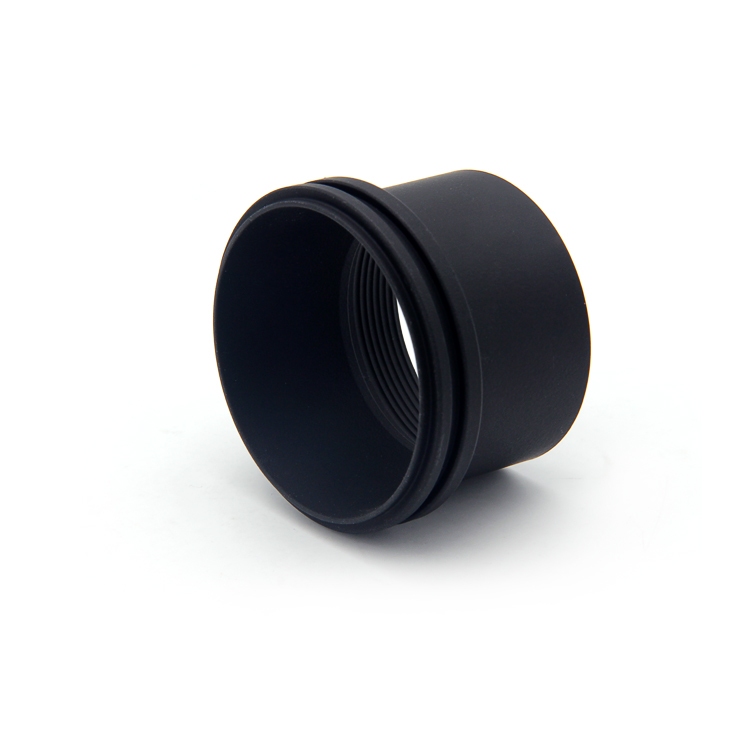


Nylon CNC Machining Parts are precision plastic components manufactured from nylon Materials using advanced CNC Machining technology. Combining the excellent strength, wear resistance, low friction, lightweight properties, and dimensional stability of nylon with the precision of CNC machining, these custom components are widely used in automotive, industrial machinery, electronics, automation, medical equipment, and other applications.
Compared with conventional metal components, CNC machined nylon parts offer lower weight, excellent corrosion resistance, electrical insulation, and good impact resistance. They are an ideal choice for applications requiring reliable mechanical performance without the weight and corrosion concerns associated with metal.
Nylon CNC Machining Parts are customized components produced by machining nylon stock such as sheets, rods, or blocks into specific shapes and dimensions. CNC Milling, CNC turning, drilling, and other precision machining processes can be used to manufacture complex nylon components according to engineering drawings or 3D CAD models.
Nylon is available in different grades, including PA6, PA66, cast nylon, and reinforced nylon. The appropriate material can be selected according to the required strength, wear resistance, friction performance, temperature resistance, and operating environment.
Typical Nylon CNC Machining Parts include:
Nylon Bushings
Nylon Gears
Nylon Rollers
Nylon Washers
Nylon Spacers
Nylon Bearings
Nylon Guides
Nylon Pulleys
Nylon Insulating Components
Custom Nylon Machine Parts
Nylon has good resistance to wear and abrasion, making it suitable for components exposed to continuous movement and friction.
CNC machined nylon parts can be used for bushings, gears, rollers, guides, and other moving components where durability is important.
Nylon has a much lower density than many metals. Replacing certain metal components with Nylon CNC Machining Parts can help reduce overall equipment weight while maintaining sufficient mechanical performance.
This makes nylon particularly useful in automotive, automation, robotics, and lightweight machinery applications.
Nylon provides relatively low friction characteristics, making it suitable for sliding and rotating components. In appropriate applications, nylon bushings, gears, and guides can operate with reduced friction and noise.
Nylon provides a useful combination of strength, toughness, and impact resistance. Depending on the grade and design, it can withstand mechanical loads encountered in industrial equipment and machinery.
For applications requiring higher mechanical performance, reinforced nylon grades can be considered.
Nylon is an electrically insulating material, making it suitable for electrical components, spacers, connectors, protective parts, and insulating structures.
Unlike metal components, nylon does not rust or corrode. This makes CNC Nylon Parts suitable for applications exposed to moisture and certain chemicals where corrosion may be a concern.
Custom Nylon CNC Machining allows manufacturers to produce components according to specific customer requirements. CNC machining is especially suitable for prototypes, replacement parts, low-volume production, and customized industrial components.
Customers can specify:
Material grade
Part dimensions
Geometric design
Tolerances
Hole diameters
Threads
Surface finish
Production quantity
Special requirements
Based on technical drawings or 3D CAD files, CNC machining can produce Nylon CNC Machining Parts with complex geometries and precise dimensions.
CNC milling is suitable for producing nylon components with flat surfaces, pockets, slots, holes, and complex three-dimensional geometries.
It can be used to manufacture custom brackets, plates, housings, guides, and structural components.
CNC turning is commonly used for cylindrical nylon components such as bushings, spacers, rollers, shafts, and rings.
The process provides consistent diameters and accurate dimensions for rotating or symmetrical parts.
Precision drilling and threading can be performed to create mounting holes, threaded holes, and other connection features.
After machining, nylon components can undergo deburring, edge finishing, polishing, and other secondary processes to achieve the required appearance and functionality.
PA6 provides good mechanical strength, toughness, wear resistance, and machinability. It is commonly used for industrial components and mechanical parts.
PA66 generally provides higher stiffness and temperature resistance than standard PA6, making it suitable for more demanding mechanical applications.
Cast nylon is available in large sizes and is often used for machining larger gears, rollers, bushings, and wear components.
Glass fiber or other reinforcement can be added to nylon to improve stiffness, strength, dimensional stability, and temperature performance.
The appropriate Nylon Plastic Material should be selected based on the actual operating environment and mechanical requirements.
Nylon CNC Machining Parts are widely used in industrial equipment for gears, bushings, rollers, guides, spacers, and wear components.
CNC Nylon Parts can be used for automotive components where lightweight construction, wear resistance, electrical insulation, and corrosion resistance are required.
Automation systems and robots require lightweight and precise mechanical components. Nylon parts can be used for guides, rollers, gears, spacers, cable management components, and customized mechanisms.
Nylon provides excellent electrical insulation, making CNC machined nylon components suitable for electrical housings, spacers, insulators, brackets, and connectors.
Certain nylon grades can be used for medical equipment components where lightweight construction, dimensional accuracy, and mechanical strength are required. The selected material must meet the applicable requirements for the specific medical application.
Nylon and metal each have their own advantages. Nylon CNC Machining Parts are particularly attractive when weight reduction, electrical insulation, corrosion resistance, and low friction are important.
Compared with metal, nylon is:
Lighter
Electrically insulating
Corrosion resistant
Generally quieter during operation
Suitable for low-friction applications
Easier to produce for certain customized geometries
However, metal may be more suitable for applications involving extremely high loads, temperatures, or stiffness requirements. Material selection should therefore be based on the actual working conditions.
Determine the expected tensile, compressive, impact, and friction loads before selecting the nylon grade.
Nylon properties can change with temperature. Applications involving elevated temperatures should use an appropriate nylon grade with sufficient thermal performance.
Nylon can absorb moisture, which may affect its dimensions and mechanical properties. For applications involving high humidity or water exposure, material selection and dimensional tolerances should take this factor into account.
PA6, PA66, cast nylon, and reinforced nylon provide different combinations of strength, stiffness, wear resistance, and dimensional stability.
Precision applications should provide detailed dimensional tolerances and technical drawings so the CNC machining process can be optimized accordingly.
Custom Nylon CNC Machining provides an efficient way to manufacture high-quality plastic components without expensive tooling. It allows manufacturers to produce prototypes and production parts directly from digital designs.
With precision CNC milling, turning, drilling, and finishing capabilities, customized nylon components can be manufactured for a wide range of industrial applications.
For companies looking for lightweight, durable, wear-resistant, and corrosion-resistant alternatives to conventional metal components, Nylon CNC Machining Parts can provide a practical and cost-effective solution.
Nylon CNC Machining Parts are used for gears, bushings, rollers, washers, spacers, guides, bearings, pulleys, and other mechanical components in industrial machinery, automotive systems, automation, electronics, and other applications.
Yes. Nylon is widely used for CNC machining because it can be processed into complex shapes with good dimensional accuracy and provides useful mechanical and wear properties.
Common options include PA6, PA66, cast nylon, and reinforced nylon. The appropriate material depends on the required mechanical, thermal, and environmental performance.
In some applications, yes. Nylon can replace metal when lightweight construction, electrical insulation, corrosion resistance, or low friction is important. However, the material must be evaluated against the required load, temperature, and stiffness.
Yes. Custom Nylon CNC Machining supports customized dimensions, geometries, tolerances, holes, threads, surface finishes, materials, and production quantities.

JIESHENG HARDWARE is a professional manufacturer that focuses on customizing High- Precision Hardware Spare Parts more than 20 years of experience.
Copyright © 2026 Dongguan Jiesheng Hardware Industry Co., Ltd. All rights reserved. Privacy Policy


 English
