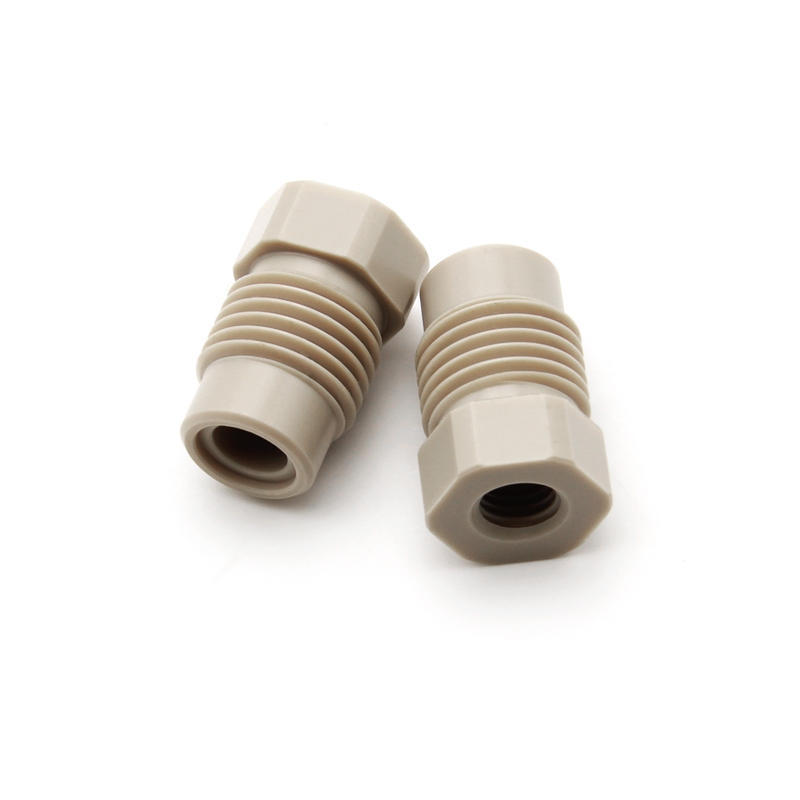


CNC Nylon Machined Parts are precision-engineered plastic components manufactured from nylon Materials through advanced CNC Machining processes. Combining the lightweight properties, mechanical strength, wear resistance, low friction, and electrical insulation of nylon with the accuracy of CNC Machining, these parts are widely used in industrial machinery, automation equipment, automotive systems, electronics, medical equipment, and custom mechanical assemblies.
As a versatile engineering plastic, nylon can be machined into complex geometries and customized dimensions without the need for expensive molds or tooling. CNC Nylon Machined Parts are an excellent choice for applications requiring lightweight construction, reliable mechanical performance, corrosion resistance, and cost-effective customization.
CNC Nylon Machined Parts are custom components manufactured by removing material from nylon rods, sheets, blocks, or other semi-finished stock using computer-controlled CNC machines. Depending on the design, CNC Milling, CNC turning, drilling, threading, and other machining operations can be used to produce precise components.
CNC machining allows manufacturers to produce nylon parts based on 2D engineering drawings, 3D CAD models, or customer specifications. It is particularly suitable for prototypes, replacement components, low-volume production, and customized industrial parts.
Nylon Bushings
Nylon Gears
Nylon Rollers
Nylon Washers
Nylon Spacers
Nylon Bearings
Nylon Guides
Nylon Pulleys
Nylon Insulators
Nylon Wear Pads
Custom Nylon Mechanical Parts
Nylon provides good wear and abrasion resistance, making it suitable for components that experience continuous contact, sliding, or movement. CNC Nylon Machined Parts can be used for bushings, gears, rollers, guides, and wear pads where long-term durability is required.
One of the major advantages of nylon is its relatively low coefficient of friction. This makes CNC Nylon Parts suitable for sliding and rotating applications.
Nylon components can help reduce friction and operating noise in certain mechanical systems, making them useful for gears, bearings, bushings, and guide components.
Nylon is significantly lighter than many metal materials. Using CNC Nylon Machined Parts instead of metal components can reduce the weight of equipment and assemblies.
This characteristic is especially useful in automotive, robotics, automation, and portable equipment where weight reduction is an important design consideration.
Despite its lightweight nature, nylon provides a useful combination of strength, toughness, and impact resistance. Different nylon grades can be selected according to specific mechanical requirements.
For applications requiring greater stiffness and dimensional stability, reinforced nylon materials can also be considered.
Nylon is a naturally electrically insulating material. CNC Nylon Machined Parts can therefore be used in electrical and electronic applications where components need to provide insulation between conductive elements.
Typical applications include:
Electrical spacers
Insulating brackets
Cable components
Connector components
Protective housings
Electronic equipment parts
Unlike conventional metal components, nylon does not rust or corrode. CNC Nylon Machined Parts can therefore be used in environments where exposure to moisture or certain chemicals may create corrosion concerns for metal components.
Custom CNC Nylon Machining provides flexibility for manufacturing components with specific dimensions, geometries, and performance requirements.
Customers can provide engineering drawings, CAD files, samples, or detailed specifications. The CNC machining process can then be adjusted according to the required material, tolerance, geometry, and production quantity.
Customization may include:
Custom dimensions
Complex geometries
Precision holes
Threaded holes
Slots and grooves
Different surface finishes
Tight dimensional tolerances
Custom nylon grades
Small or large production quantities
CNC machining is particularly advantageous for custom nylon components because it eliminates the need to create dedicated injection molds for many low-volume applications.
CNC milling is suitable for producing nylon components with flat surfaces, pockets, slots, holes, and complex three-dimensional shapes.
It can be used to manufacture brackets, plates, housings, guides, fixtures, and other custom components.
CNC turning is commonly used for cylindrical CNC Nylon Machined Parts such as bushings, spacers, rollers, rings, shafts, and sleeves.
It provides accurate control over external and internal diameters and is suitable for rotationally symmetrical components.
Precision drilling can create mounting holes, through-holes, and other openings according to engineering drawings.
Internal and external threads can be machined into nylon components when the design requires threaded connections.
PA6 is a commonly used engineering nylon with good strength, toughness, wear resistance, and machinability. It is suitable for a wide variety of industrial CNC applications.
PA66 generally offers higher stiffness and temperature resistance than PA6, making it suitable for more demanding mechanical applications.
Cast nylon is often available in larger stock sizes and can be machined into large bushings, rollers, gears, wear pads, and other industrial components.
Glass fiber reinforced nylon offers improved stiffness, strength, and dimensional stability compared with unfilled nylon. It can be considered for applications involving higher mechanical loads.
The selection of CNC Nylon Material should be based on the actual operating environment, including load, temperature, moisture, friction, chemical exposure, and dimensional requirements.
CNC Nylon Machined Parts are widely used in industrial machinery for gears, bushings, rollers, spacers, guides, wear plates, and other mechanical components.
Automation systems require components that are lightweight, durable, and precisely manufactured. CNC nylon parts can be used for guide components, rollers, fixtures, gears, and customized mechanical structures.
Nylon machined components can be used in automotive applications where lightweight construction, wear resistance, electrical insulation, and corrosion resistance are required.
CNC Nylon Parts can help reduce the weight of robotic assemblies while providing suitable mechanical performance for selected gears, spacers, guides, and other components.
Because nylon provides electrical insulation, CNC Nylon Machined Parts can be used for insulating components, brackets, spacers, connector parts, and electronic equipment components.
Certain nylon grades can be machined into components for medical and laboratory equipment. The material grade and manufacturing requirements should be selected according to the specific application and applicable industry standards.
CNC Nylon Machined Parts can be a practical alternative to metal in applications where extreme strength and temperature resistance are not required.
Compared with many metals, nylon offers:
Lower weight
Good wear resistance
Low friction
Electrical insulation
Corrosion resistance
Good impact resistance
Reduced operating noise in some applications
Flexible customization
However, metals can be more suitable for applications involving very high loads, high temperatures, or extreme stiffness requirements. Therefore, material selection should always be based on the actual application conditions.
Determine the expected load, impact, friction, and operating cycles. This helps identify the most suitable nylon grade.
Nylon properties can change with temperature. For elevated-temperature applications, a suitable grade with adequate thermal performance should be selected.
Nylon can absorb moisture, which may affect dimensions and mechanical properties. For applications involving water or high humidity, moisture exposure should be considered during material selection and tolerance design.
For precision applications, technical drawings should clearly specify critical dimensions and tolerances. This allows the machining process to be optimized for the required accuracy.
PA6, PA66, cast nylon, and reinforced nylon have different performance characteristics. Choosing the correct material is essential for achieving reliable long-term performance.
CNC Nylon Machined Parts offer an effective combination of precision, lightweight construction, wear resistance, electrical insulation, and customization.
CNC machining makes it possible to manufacture complex nylon components directly from digital designs, making the process particularly suitable for prototypes, replacement parts, customized components, and small-to-medium production runs.
For manufacturers looking for a lightweight and durable alternative to conventional metal components, CNC Nylon Machined Parts can provide a practical solution for a wide range of mechanical, industrial, electrical, and automation applications.
CNC Nylon Machined Parts are precision plastic components manufactured from nylon stock using CNC milling, turning, drilling, and other machining processes.
CNC Nylon Machining is used to manufacture bushings, gears, rollers, spacers, guides, washers, insulators, wear components, and other customized plastic parts.
Common materials include PA6, PA66, cast nylon, and glass fiber reinforced nylon. The appropriate grade depends on the required mechanical, thermal, and environmental properties.
Yes. Nylon provides good strength and toughness for many mechanical applications. Reinforced nylon grades can offer increased stiffness and mechanical performance.
In suitable applications, CNC Nylon Machined Parts can replace metal components when lightweight construction, corrosion resistance, electrical insulation, low friction, or reduced noise is important. However, the application requirements should be evaluated before material substitution.
Yes. CNC Nylon Machined Parts can be customized according to drawings or CAD files, including dimensions, geometries, holes, threads, tolerances, material grades, and production quantities.

JIESHENG HARDWARE is a professional manufacturer that focuses on customizing High- Precision Hardware Spare Parts more than 20 years of experience.
Copyright © 2026 Dongguan Jiesheng Hardware Industry Co., Ltd. All rights reserved. Privacy Policy


 English
