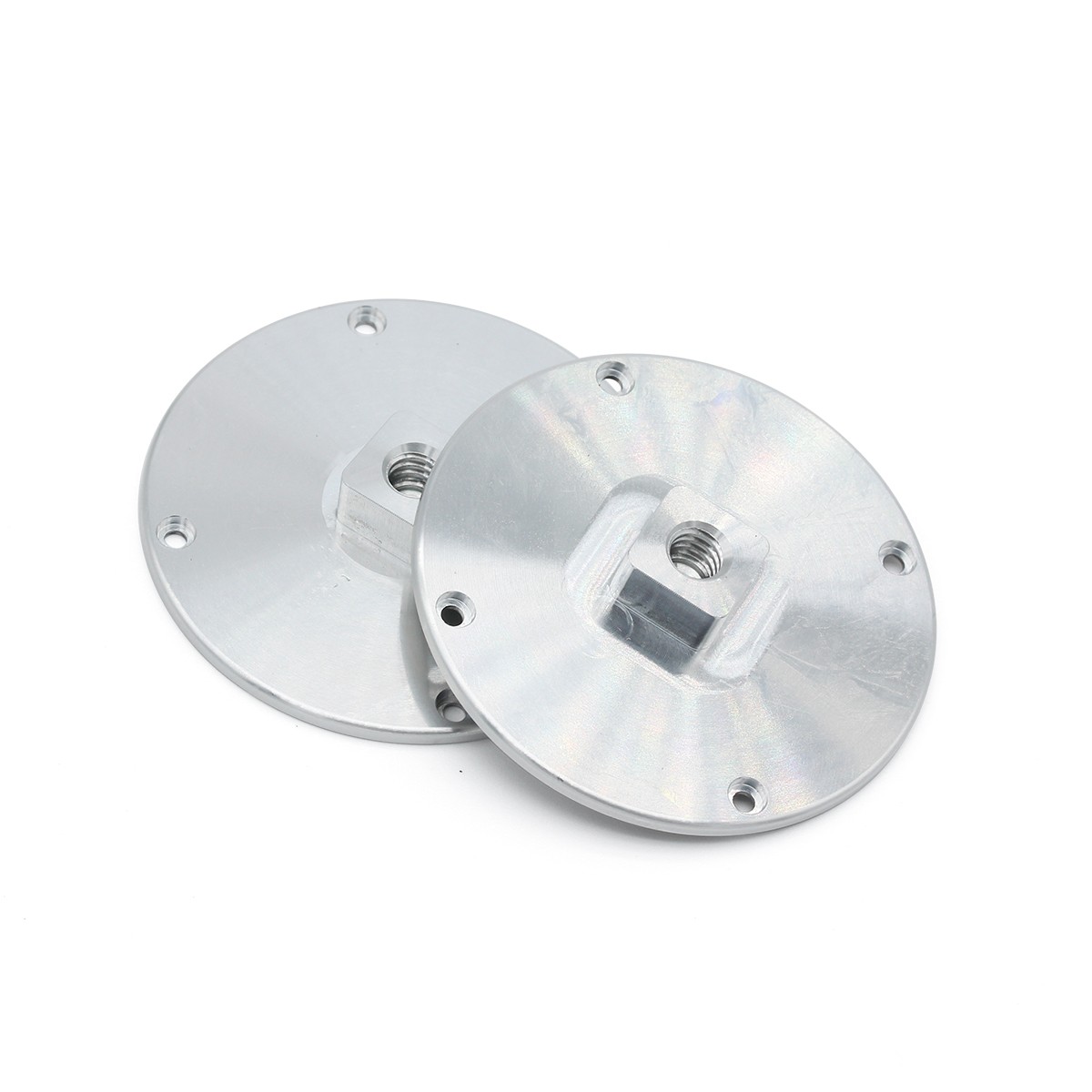


Aluminum CNC turning parts are precision-machined components manufactured through CNC turning technology using aluminum alloy Materials. During the CNC turning process, the aluminum workpiece rotates at high speed while cutting tools remove material to achieve the required shape, size, and tolerance.
With the advantages of lightweight design, excellent machinability, corrosion resistance, and good mechanical performance, custom aluminum CNC turning parts are widely used in industries such as aerospace, automotive, electronics, medical equipment, robotics, and industrial machinery.
Compared with traditional machining methods, CNC turning provides higher accuracy, better repeatability, and more efficient production for complex aluminum components.
Common CNC turned aluminum parts include:
Aluminum shafts
Aluminum bushings
Aluminum sleeves
Aluminum pins
Aluminum spacers
Threaded aluminum components
Precision aluminum connectors
Custom mechanical parts
The production of aluminum CNC turning parts involves multiple precision machining processes, from material selection to final inspection.
The first step in manufacturing precision aluminum CNC turning parts is selecting the appropriate aluminum alloy according to the application requirements.
Common aluminum alloys include:
Aluminum 6061 is one of the most widely used materials for CNC machining because it offers:
Good machinability
High corrosion resistance
Balanced strength
Excellent surface finish
It is suitable for general industrial components, mechanical parts, and structural applications.
Aluminum 7075 is a high-strength aluminum alloy commonly used in aerospace and demanding applications.
Its advantages include:
High strength-to-weight ratio
Excellent fatigue resistance
Superior mechanical performance
Aluminum 6063 provides:
Good surface quality
Excellent extrusion performance
Lightweight properties
It is often used for components requiring an attractive appearance and smooth finish.
Before machining, engineers create CNC programs based on:
CAD drawings
3D models
Technical specifications
Dimensional tolerances
Surface finish requirements
The CNC system controls the movement of cutting tools to ensure accurate and repeatable machining results.
During CNC turning, the aluminum material rotates while cutting tools remove excess material.
Common CNC turning operations include:
Creates a flat surface on the end of the aluminum component.
Machines the outside diameter to achieve the required size and shape.
Creates precise internal holes and cavities.
Produces internal or external threads for assembly applications.
Adds specific features according to the product design.
Through these operations, manufacturers can produce high-precision CNC turned aluminum parts with complex geometries.
After CNC machining, aluminum components can receive different surface treatments to improve appearance, durability, and corrosion resistance.
Common surface finishes include:
Anodizing is one of the most common finishes for aluminum CNC parts.
Benefits include:
Improved corrosion resistance
Increased surface hardness
Enhanced appearance
Various color options
Sandblasting creates a uniform matte surface and improves the visual quality of aluminum components.
Polishing provides:
Smooth surface finish
Better appearance
Reduced surface roughness
Powder coating adds an additional protective layer and allows customized colors.
One of the biggest advantages of aluminum is its excellent strength-to-weight ratio.
Compared with steel components, aluminum CNC turning parts provide similar performance while significantly reducing weight.
This makes them ideal for aerospace, automotive, and portable equipment applications.
Aluminum is one of the easiest metals to machine.
Its excellent machinability allows manufacturers to achieve:
Faster production speeds
Complex designs
Lower machining costs
High precision
This makes aluminum an ideal material for custom CNC turned parts.
CNC turning technology provides excellent dimensional accuracy.
Professional CNC machining manufacturers can produce aluminum parts with:
Tight tolerances
Consistent dimensions
Reliable performance
This is especially important for industries requiring precision components.
Aluminum naturally forms a protective oxide layer that improves corrosion resistance.
Additional surface treatments such as anodizing can further enhance durability.
Aluminum has good thermal and electrical conductivity, making it suitable for:
Electronic components
Heat dissipation parts
Electrical connectors
The aerospace industry widely uses precision aluminum CNC turning parts due to their lightweight and high-performance characteristics.
Common applications include:
Aircraft components
Structural parts
Engine components
Precision fittings
Fasteners
In automotive manufacturing, aluminum turned parts are used for:
Engine components
Transmission parts
Sensor housings
Custom connectors
Mechanical assemblies
The lightweight properties of aluminum help improve vehicle efficiency.
The electronics industry requires precise and reliable components.
Common applications include:
Electronic housings
Connectors
Heat dissipation components
Precision brackets
Device parts
Medical equipment requires high precision and reliable materials.
Aluminum CNC turning components are used for:
Medical instrument parts
Equipment housings
Precision mechanical components
Industrial equipment manufacturers use CNC turned aluminum parts for:
Shafts
Bushings
Couplings
Machine components
Automation parts
Many industries require custom aluminum CNC turning parts designed according to specific drawings and performance requirements.
A professional CNC machining supplier can provide customized solutions including:
Parts can be manufactured according to customer-provided:
Drawings
3D models
Specifications
Available finishes include:
Anodizing
Polishing
Sandblasting
Powder coating
CNC turning supports both:
Rapid prototyping
Low-volume production
High-volume manufacturing
Although both are CNC machining processes, they are suitable for different part designs.
| Feature | CNC Turning | CNC Milling |
|---|---|---|
| Workpiece Movement | Rotates during machining | Fixed during machining |
| Best For | Cylindrical parts | Complex shapes |
| Common Parts | Shafts, bushings, sleeves | Housings, brackets, plates |
| Equipment | CNC lathe | CNC milling machine |
CNC turning is mainly used for round or cylindrical aluminum components, while CNC milling is better suited for complex multi-dimensional parts.
A reliable aluminum CNC turning manufacturer should have:
Advanced CNC turning machines
Experienced engineers
Professional quality inspection equipment
The manufacturer should understand different aluminum alloys and recommend suitable materials based on:
Strength requirements
Application environment
Machining requirements
Strict quality control ensures aluminum CNC turned parts meet customer requirements.
Common inspection methods include:
CMM inspection
Dimensional measurement
Surface roughness testing
Material verification
Aluminum CNC turning parts are precision components manufactured using CNC turning machines with aluminum alloy materials. They are commonly used in automotive, aerospace, electronics, and industrial applications.
Aluminum is lightweight, corrosion-resistant, easy to machine, and provides excellent strength-to-weight performance, making it ideal for CNC turned components.
The most common aluminum alloys include 6061, 6063, and 7075 due to their excellent machinability and mechanical properties.
Yes. Manufacturers can produce custom aluminum CNC turning parts based on customer drawings, dimensions, tolerances, materials, and surface finishing requirements.
Common surface treatments include anodizing, sandblasting, polishing, and powder coating.

JIESHENG HARDWARE is a professional manufacturer that focuses on customizing High- Precision Hardware Spare Parts more than 20 years of experience.
Copyright © 2026 Dongguan Jiesheng Hardware Industry Co., Ltd. All rights reserved. Privacy Policy


 English
